

Let me be honest: I don’t like to write about the war with Iran, especially because this unauthorized war of choice was launched without clear justification, sober assessment of the potential for global disaster or a real exit strategy. But I think it’s important to grapple not just with the choices made but the consequences that this reckless adventure has yielded.
Donald Trump has lied by declaring victory repeatedly. He has dragged us through his fantasy of Iran’s “unconditional surrender,” illustrated by the Iranians holding up white flags and “crying uncle.” As the talks with Iran have faltered, he’s underscored his disregard for the gravity of war and the matter of life and death by whining that he finds the slow, difficult negotiations with the regime to be “very boring.”
But war is never as easy as imagined by people like Trump who never served yet romanticize violence, glamorize warfare and expect victory at the snap of his fingers.
Over the weekend, Iran attacked U.S. military bases in Bahrain and Kuwait, according to Iran’s Revolutionary Guard. This included seven ballistic missiles that flew over residential areas in Kuwait. Iran claimed the attack was in response to U.S. strikes on one of its tankers and radar sites in Goruk and Qeshm Island, both in the Strait of Hormuz. Then, late on Sunday, Iran further escalated the conflict by firing missiles at Israel—this following Israel’s attack against Iran-backed Hezbollah on the outskirts of Beirut.
These escalations, amid what’s supposed to be a ceasefire that began in April, further complicates the possibility of successful negotiations to end the war. As oil and gas prices continue to rise in the U.S. and the dwindling oil supply continues to disrupt supply chains and threaten the global economy, the pressure to find a solution to end the conflict should be a high priority for Trump. Instead, he’d much rather focus on repainting the Lincoln Memorial reflecting pool, building his billion-dollar ballroom, erecting his gaudy, over-sized arch, staging a cage fight on White House grounds and pursuing other taxpayer-funded vanity projects.
If only we had a real president
Of course, if he were a serious person—not a tragic joke—he would have grasped that there was a reason why previous U.S. presidents chose not to go to war with Iran. He would have read the intel that underscored the probability that the Iranians would choke the global economy by shutting down the Strait of Hormuz.
If he were a healthy person—not a sociopath lacking the capacity to comprehend the suffering of others—he would have worried about the loss of life and the scale of injuries (on both sides) and feared triggering a regional conflict that would seriously harm Middle East allies and U.S. military bases.
If he cared about quaint qualities like honesty and responsibility—not just self-aggrandizement and self-enrichment—he would have resisted the pressure of Israeli Prime Minister Benjamin Netanyahu to launch the war and remembered his own campaign promises not to pursue a war with Iran or drag the U.S. into another “forever war.”
And if he had a basic understanding of the value of collaboration and mutual support—rather than acting like a bully and a malignant dictator free to operate alone—he would have reached out to American allies and members of Congress before launching a war that could eventually cost upwards of a trillion dollars and expecting to successfully strong-arm former allies to do his bidding. He would have grasped that the trust of allies depends on cooperation.
The lingering impact of war
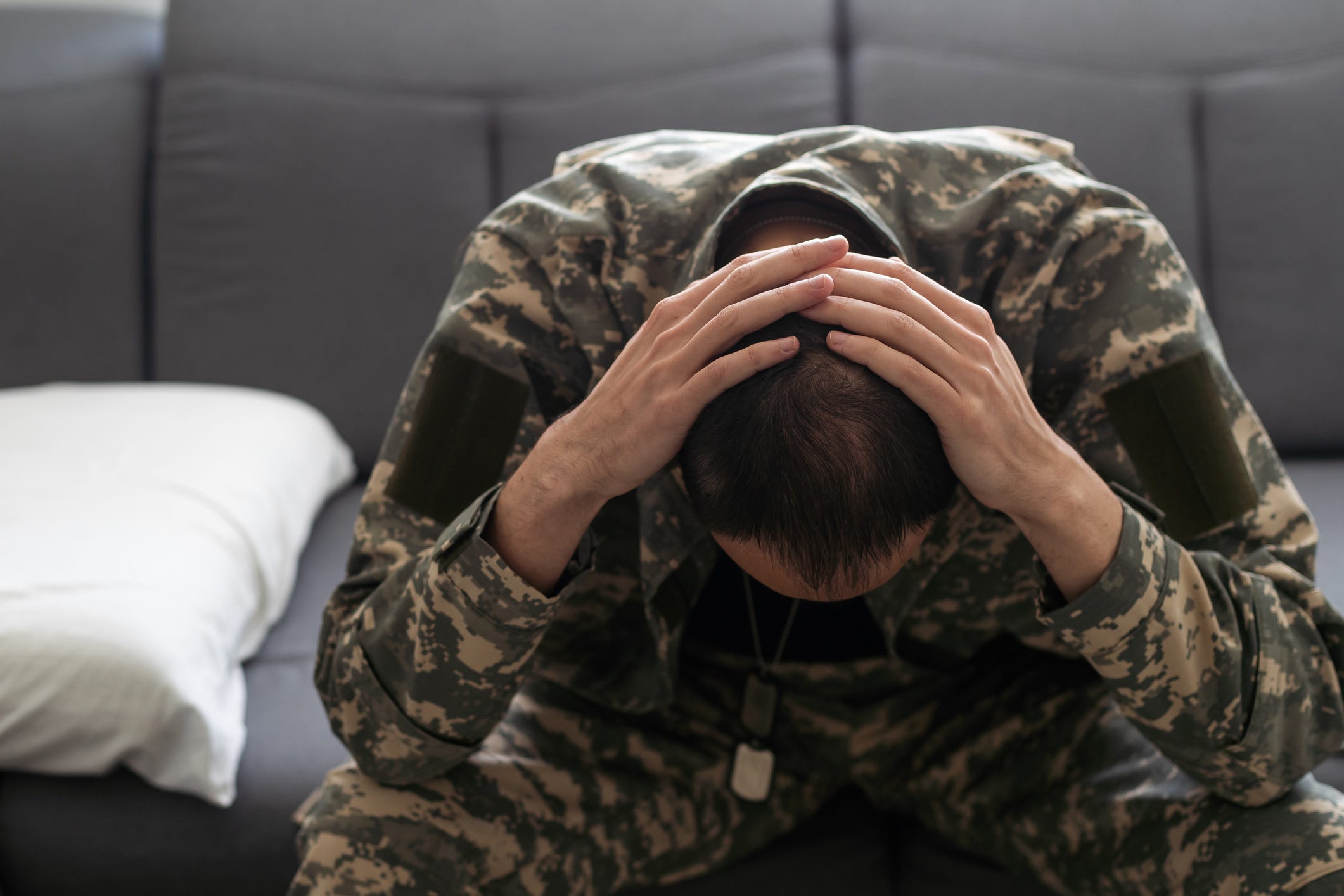
But there’s another side to this, which is how wars affect the participants psychologically, not just during the conflict itself but often for decades to follow. Unsurprisingly, data from the National Center for PTSD (post-traumatic stress disorder) has found that veterans are more likely than civilians to suffer from PTSD.
It’s particularly interesting to note how long the impacts of traumatic events can linger. The center found that 29 percent of the veterans of the War on Terror have experienced PTSD, including those who served in Iraq dating back to 2003, while 15 percent continued to report the disorder during the last year.
Similarly, 21 percent of veterans of the 1991 Persian Gulf War have experienced PTSD, and 14 percent still faced the after-affects in the last year—a full 35 years later. We have every reason to assume that survivors of even more extended combat, such as in Vietnam or World War II, experienced higher levels of PTSD.
This has been on my mind in recent days amid the intensifying discussion about Graham Platner, the Democratic candidate for Senate in Maine. Indeed there’s been growing discomfort and consternation about Platner’s alleged sexually explicit texting and volatile relationships with women, providing complicated new information for Maine voters to unravel as they decide who to advance in their primary election this Tuesday. (This is further complicated by the fact that one key source is a GOP operative, causing Platner to insist that her claims are politically motivated even while acknowledging that he was “a far from perfect boyfriend.”)
Maine voters are faced with a choice: Should we vote for Platner, despite the reports, because he has the best chance of beating incumbent Susan Collins and helping Democrats take back the Senate? Or should we reject Platner because of the questions these allegations raise about his integrity?
But it’s reasonable to assume that some of his volatile and questionable behavior is related to the psychological impact of war. Platner, who served three combat tours in Iraq as a Marine, defended himself by explaining to supporters at a Friday rally that he experienced a period of “darkness” after returning from Iraq as he battled untreated PTSD. This was not the first time he’s discussed his mental state resulting from combat to explain some of his bad choices.
California Rep. Ro Khanna, who backs Platner, underlined the consequences of military conflict. “We broke thousands of young men by sending them into dumb wars,” Khanna said at the same rally, adding that Platner has been working to become “a better man” in recent years.
Fifteen years after U.S. combat troops completed their initial withdrawal from Iraq, that conflict has now been revived as the contest between Platner and Collins highlights the choices each person made and the consequences that followed. “We’ve watched her for decades vote to support these stupid, pointless foreign wars like the one she voted to send me off to fight,” Platner said Friday.
This followed the comment of Collins in late May, who told reporters, “I respect anyone who steps forward to serve their country, but the fact is that was Platner’s decision to serve. He was not drafted.”
To no surprise, this remark reportedly incensed Platner. “When running against someone like me who has lived the material consequences of her bad decisions,” Platner told The Washington Post a week ago, “I don’t really think she knows what to do with that.”
He also said he think Collins has “learned no lessons” from the Iraq war. But she was one of three Republican senators who voted in April for the resolution to push Trump to remove U.S. armed forces from hostilities in Iran.
Time will tell exactly what lessons Collins has learned that she can apply to the Iran conflict. But we already know that there’s no chance that the growing human cost will convince Donald Trump to accelerate the exit. (Let’s note that the combined casualties from Russia’s invasion of Ukraine may reach a nearly unfathomable 2 million this year, yet Trump has obviously lost interest in doing anything to end that horror.)
After all, he’s the shameless narcissist who told Howard Stern in 1993 that having unprotected sex in the 1980s was his “personal Vietnam.” And more: “I feel like a great and very brave solider.” This from the guy who avoided the draft by claiming he had bone spurs.
To date, 13 Americans have reportedly been killed in the Iran war and over 400 have been injured, many with traumatic brain injuries. Add to this the ripple effect for their families and friends, who, even after an end to the conflict is finally negotiated, will be coping with the terrible decisions made by Trump and his enablers, possibly for decades. We should hope that the horrors triggered by Trump will motivate future leaders to act with compassion and all the seriousness that war requires.
One More Thing: If you missed the first episode of my new weekly show, Six Questions with Steven Beschloss, I hope you’ll check out my conversation with Mary Trump in which we discussed her uncle’s accelerating cognitive decline and national trauma. This week, I’ll be talking with George Conway on the critical issue of accountability. It goes live on Wednesday at 7PM ET.
Please consider becoming a paid subscriber for $50 a year or just $5 a month, if you’re not already. This helps sustain and expand the work of America, America, keep nearly all the content free for everyone and give you full access to the comments sections.
"The war is not meant to be won, it is meant to be continuous." - George Orwell
If only we had a real president….