
The Many Layers of History
Revisiting Berlin. Reckoning with its terrible past and Germany's uncertain future.

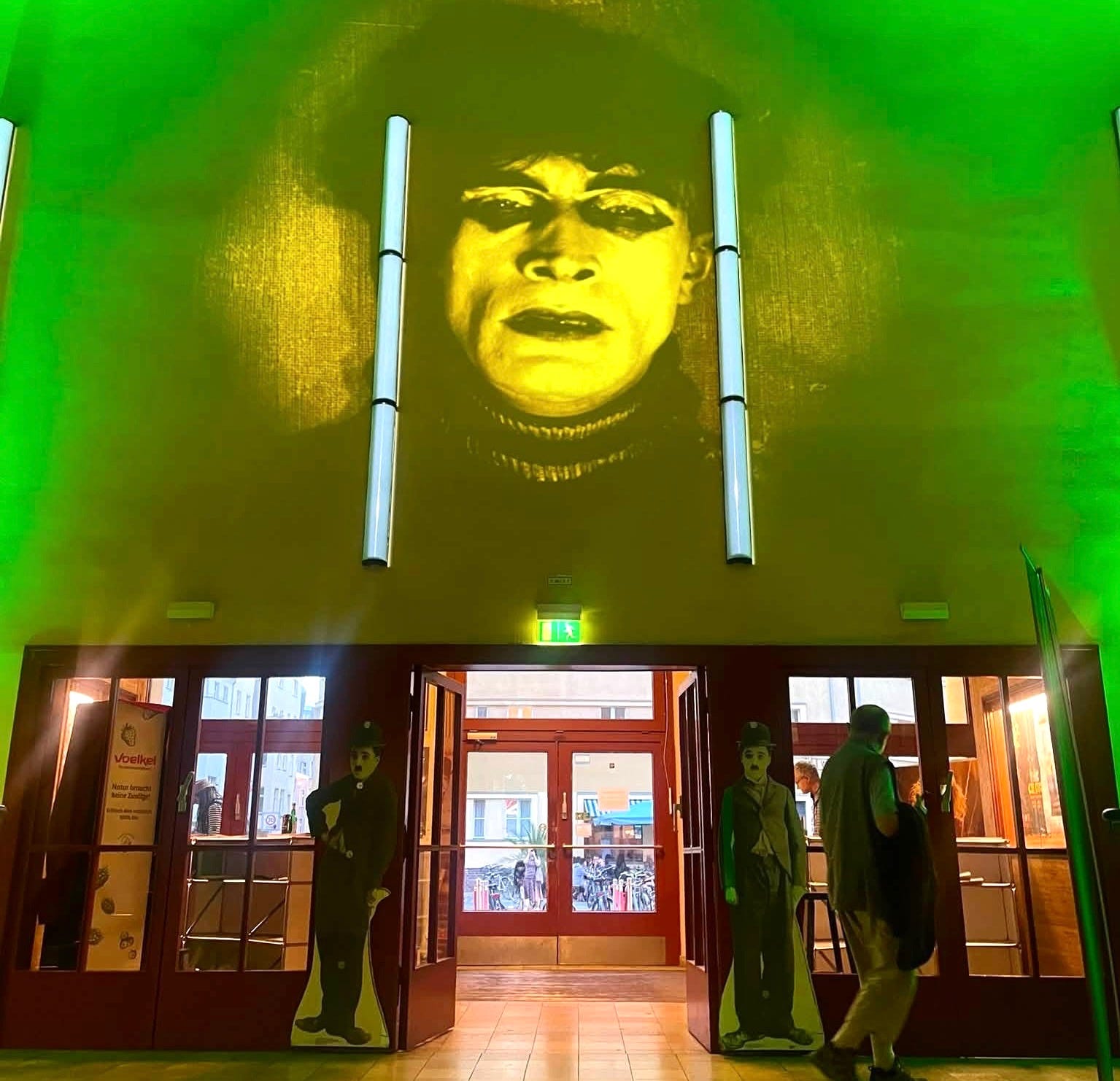
My father, his brother and mother escaped from Nazi Germany in March 1939 on the USS Manhattan headed to New York from Hamburg. My grandfather—a physician, member of the Social Democrat Party and Jewish—had already gone underground in November 1938 and escaped to Havana, Cuba. My great-grandmother, the woman who largely raised my father (he was just 10 when they fled), stayed behind in Berlin, unwilling to leave her Germany and the life she knew.
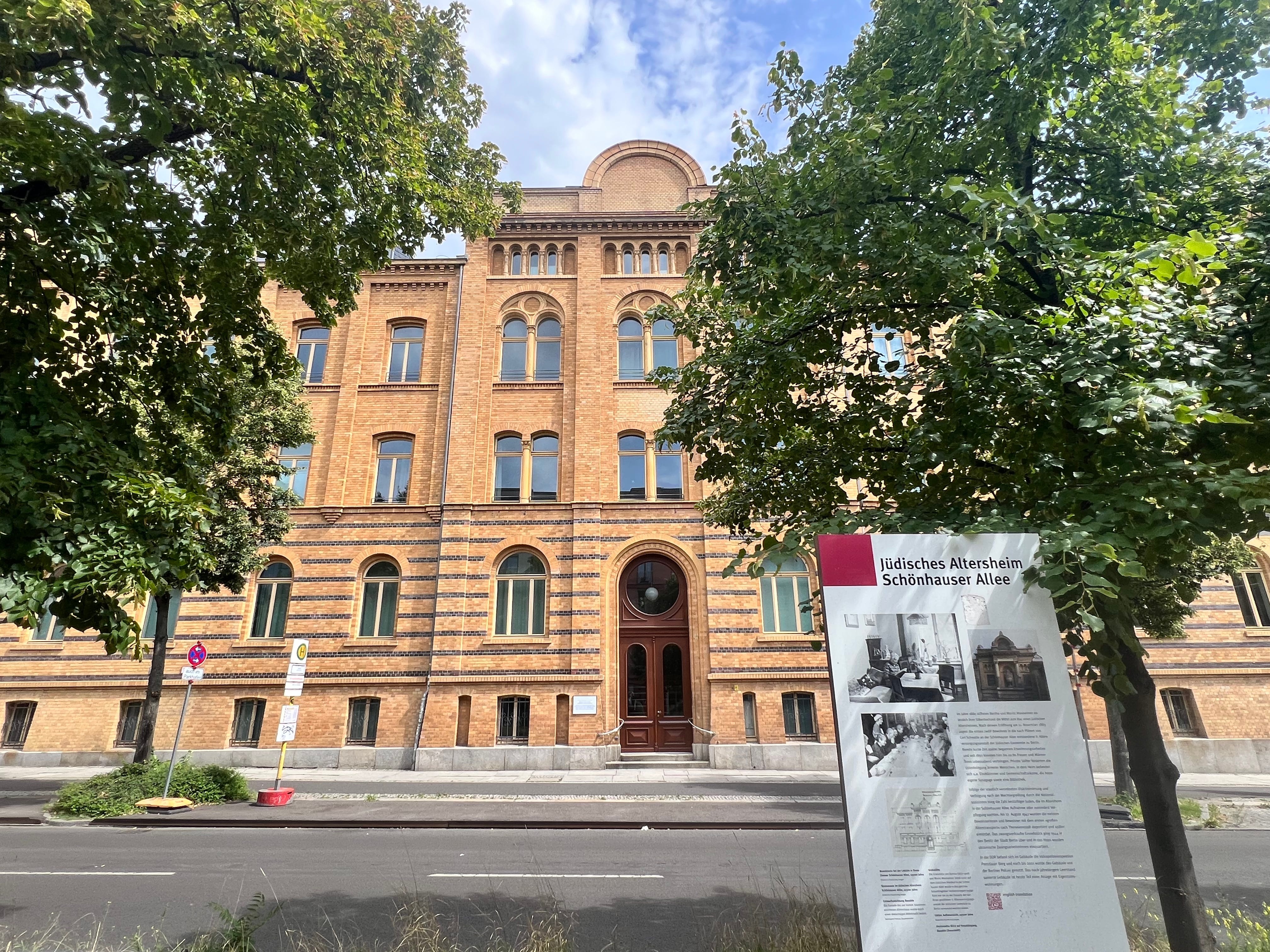
We never knew exactly what happened to Marie after her family left, but I’ve been able to find records that she moved to a home for Jewish elderly. In an uncanny coincidence, that home in Berlin’s Prenzlauer Berg neighborhood was less than a mile from where my wife and I were staying in Mitte, little more than a 15-minute walk away.
While I don’t know what her life was like there, I do know what happened to her and the other elderly residents on August 17, 1942, almost exactly 84 years ago this month: They were all deported to Theresiendstadt near Prague in Czechoslovakia and subsequently murdered by the Nazis. Some died of starvation, others were sent to be gassed at the Auschwitz-Berkenau or Treblinka death camps.
That home in Prenzlauer Berg on Schönhauser Allee still stands. The purpose of the yellowish-brown building has changed multiple times since its residents were sent from there to their deaths. It was used to house Ukrainian forced laborers for the remainder of the war, then taken over by the East Berlin police until 2001. Now it has been transformed into residential apartments, which strikes me as particularly ghoulish not only because of the building’s murderous past, but also because an old Jewish cemetery with many broken stones is directly behind it.
But this is the history of Berlin, a city that does not stand still, even as it has documented its past and erected street plaques detailing its horrors and memorializing some of the many whose lives have been stolen. It’s worth noting one location that has been consciously ignored, so as to not turn it into a mecca: the site of Hitler’s bunker where he committed suicide. Now there’s a parking lot there with nothing to see besides a nearby snack shop.
What follows below is primarily excerpted from my visit to Berlin four years ago, but I should note one shift in the thinking of my friends here now. If just a few years ago I could savor a kind of positive progressivism—an antidote to the Trump-fueled hostility coursing through America—now there is a growing fear of the rise of the far-right Alternative for Germany party (the AfD). I heard this from a handful of friends, but the worries of one stands out.
Rolf-Axel Krause, a musician and educator who grew up in the 1960s on the same street where my father’s family lived (and heard stories about their plight from his mother), was blunt in his assessment. “Things have taken a bad turn in Germany. I’m really scared—and while I’m certainly not alone in that, it’s just no fun living here anymore,” he told me. “It is like a nightmare that I and many other Germans are currently living through.”
These feelings tie to the latest polls that show the AfD’s growing strength, surely buoyed by the falling fortunes of the unpopular Chancellor Friedrich Merz whose approval ratings have sunk below 20 percent. In a new national poll, 28 percent of Germans said they would vote for AfD if federal elections were held now. That’s a record high, making it the leading party, surpassing Merz’s Christian Democratic Union polling at 21 percent.
The poll also found that half of the respondents seek a fundamental change in German politics, as trust in the current system has declined. While a full 43 percent of everyone polled said they feel marginalized, that number jumps to 70 percent among those who support the extremist AfD.
It’s no wonder that, amid this mindset, the AfD’s anti-immigrant, antisemitic, anti-Muslim, anti-EU and anti-NATO hostility is resonating. Nor is it a surprise that this neo-Nazi party has found support from Trump and JD Vance, the latter of whom met with its leader Alice Weidel last year and despicably scolded Europeans for not being more open to such extremist groups who are finding voter support.
“Who can still claim not to know what is bearing down on us?” my friend Ralf-Axel worried, adding, “It is a disgrace to my country. I am ashamed...yet I want to be strong, like my grandfather, who protected Jewish women and children from the concentration camps. He was my role model!”
State elections next month in Eastern Germany may lead to the AfD winning an absolute majority of seats in several state parliaments, a first for a far-right party since World War II and offering additional credence to my friend’s portentous fears.
And yet: History proves over and over that humans—if they’re lucky enough and able to survive the darkest times—find new ways to adapt and change. That may help explain my fascination with Berlin, which I described in my 2022 visit, despite my personal emotional complexity being here. What follows is an excerpt from that report.
On my first full night in Berlin, my Austrian-born friend who’s had a home in the German capital for many years, succinctly summarized the city in a way that’s stuck with me. “Berlin,” he said over dinner, “is a city of many layers.”
This is not my first visit here; I came two years after the fall of the Berlin Wall on November 9, 1989, and again two decades later. But both of those trips were just for a couple of days and very focused, not giving me the time or latitude to confirm or deny my friend’s proposition.
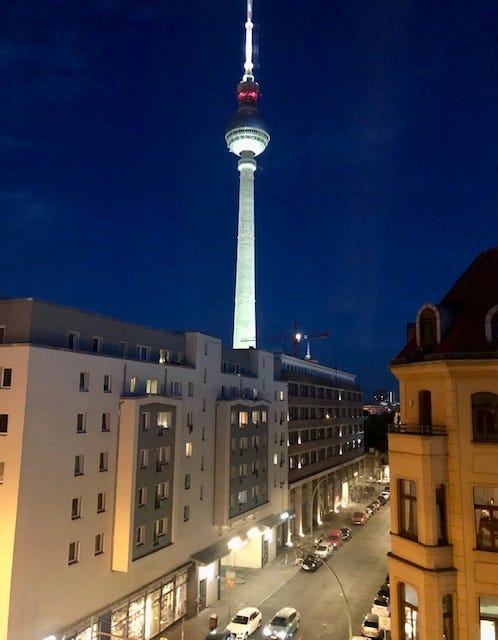
I’m staying in Mitte, the central district of Berlin, which combines portions of the former East Berlin and West Berlin. Outside my window is the Berlin Television Tower, completed in 1969, serving as both a symbol of the “modern” former German Democratic Republic (GDR) and a geographic landmark at over 1,200 feet (one of the tallest structures in Europe). My wife tells me that her childhood friend from a neighbor family in Finland kept a plastic replica of the tower on their book shelves. It still amazes me that I can be staying in the East and so close to this, given how shut off communist East Berlin was.
Walk a minute up our street, Rosa Luxemburg Strasse, you find vivid reminders of 20th century Berlin history. The Karl Liebknicht House was named for the man who co-founded the Communist Party in Germany with Rosa Luxemburg (both were murdered in 1919 and became revolutionary symbols). Built as a factory in 1912, it became the headquarters of the Central Committee until the Nazis took it over, raised the swastika flag, renamed it the Horst Wessel House, and used it to detain and torture Jews and other political opponents. After the war, it became the Karl Liebknecht House again and the East German Institute for Marxism-Leninism resided there.
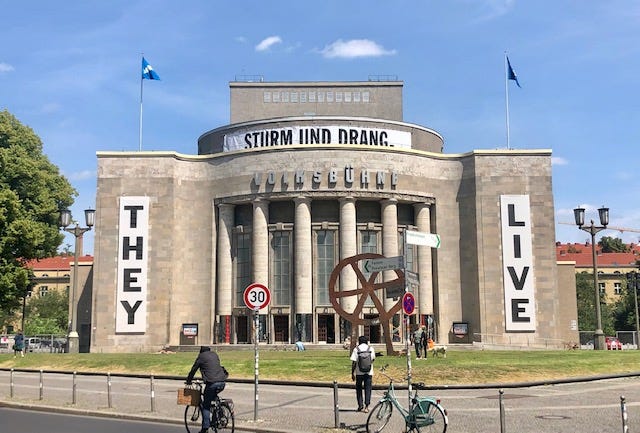
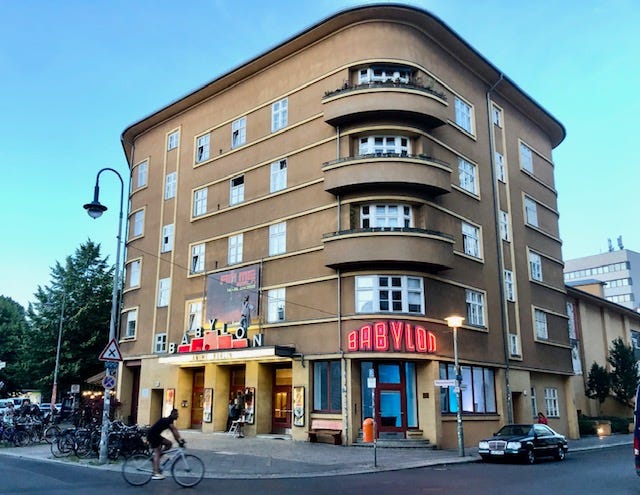
I was more fascinated to see Volksbühne (the People’s Theater)—and even more, the Babylon movie theater, which started showing silent films with an orchestra in 1929 and has continued to show films ever since, no matter who was in power. By chance, they were showing the silent film Metropolis, along with live music from their 18-member Babylon orchestra.

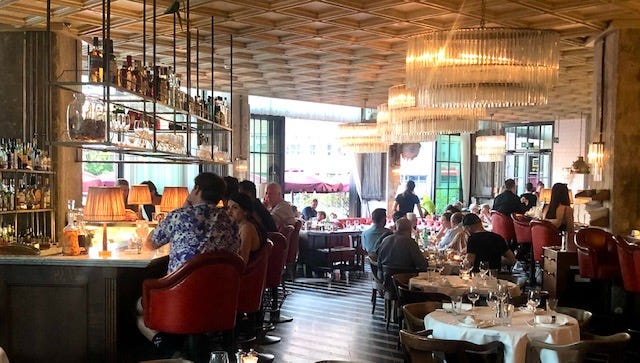
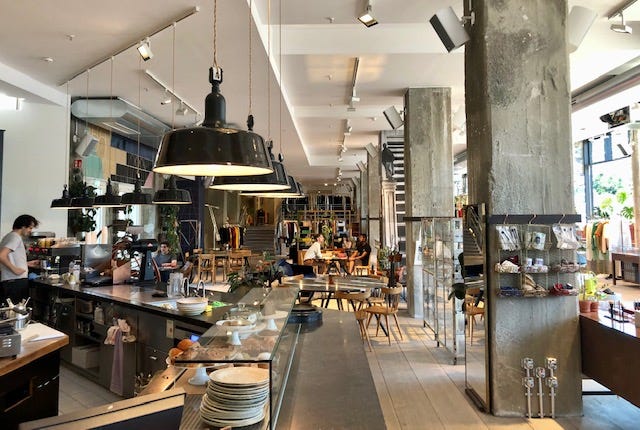
But it may be the nearby Soho House that best exemplifies the many layers—the terrible layers—that can define the city, only to be redefined and remade into something new. If you didn’t know, you might just think this beautiful structure is simply a stylish restaurant, spa, cafe, hotel and club for fashionistas and other members of the globe-trotting Berlin cool crowd.
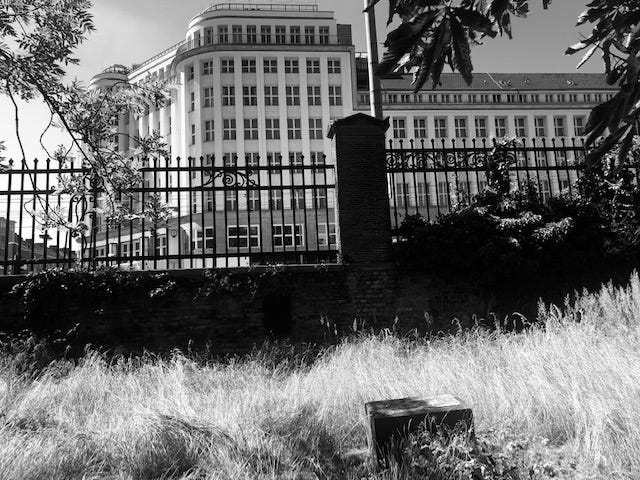
But this was once a department store, until its Jewish owner Hermann Golluber was forced by the Nazis to flee and it became the headquarters for the leader of the Hitler Youth organization. Outside its doors were held Nazi parades and rallies. Across the street, in a now largely ignored cemetery, Hitler and Joseph Goebbels came to visit the grave of their fallen martyr and propaganda tool, Horst Wessel, a 22-year-old “assault leader” for the Nazi stormtroopers, who was shot in the head in 1930. His lyrics for a march became the official anthem of the Nazi Party and later the co-national anthem of Germany.
As a memorial outside the building notes, after the war when Berlin was divided, East Berlin’s Socialist Unity Party took over the building and it became the “centre of power” for the young GDR. Here the Stalinist party model was planned and imposed. Here purges were implemented and death sentences were decided for political opponents. Here, after 1959, the Central Party kept its archives until the fall of the Berlin Wall and the reunification of Germany in 1990.
I mentioned a bit of this history to a new friend, a talented German photographer and filmmaker in his thirties. A politically aware person who travels widely for his work throughout the world and a Berlin resident, he hadn’t heard of Horst Wessel or was particularly conscious of the building’s background.
That’s the thing: While plaques and other memorials detail the city’s history everywhere you go, providing clear reminders of the atrocities and other horrors committed, a bustling Berlin has refused to stay stuck in the tragedies of the past. That could sound like denial of this history, but my sense from the variety of progressive people I met is that it’s more a matter of acceptance and desire to be more inclusive, tolerant and positive than those that came before.
As journalist and Berlin resident Joshua Hammer writes, Berlin is “an astonishingly varied city, an urbanscape in a constant state of change,” one that “requires a constant reckoning with the past. And yet the German capital, as I long ago discovered, doesn’t allow you to linger too long over the dark side of its history.”
Some tragedies are hard, if not impossible, to overcome. But I have returned to this this city now two times in the last four years. Maybe it’s to reckon with my history, but also to sort through how it’s possible to take the worst of times, learn from them and emerge wiser and stronger.
As the 2026 midterm elections approach, it’s more important than ever to support the survival of democracy and the development of independent media. Most of my posts are free, but paid subscribers get full access to the comments sections, exclusive online chats, live video forums and the full archive of essays and recordings.
Thanks for sharing this Steve. 🖖
Beautifully, heart achingly written. I think most of my family was able to escape the Holocaust and come to America to start a new life. This begs the question…when is it time to leave? How did they know? G-D bless the souls that did not escape. May their memories forever be a blessing.