

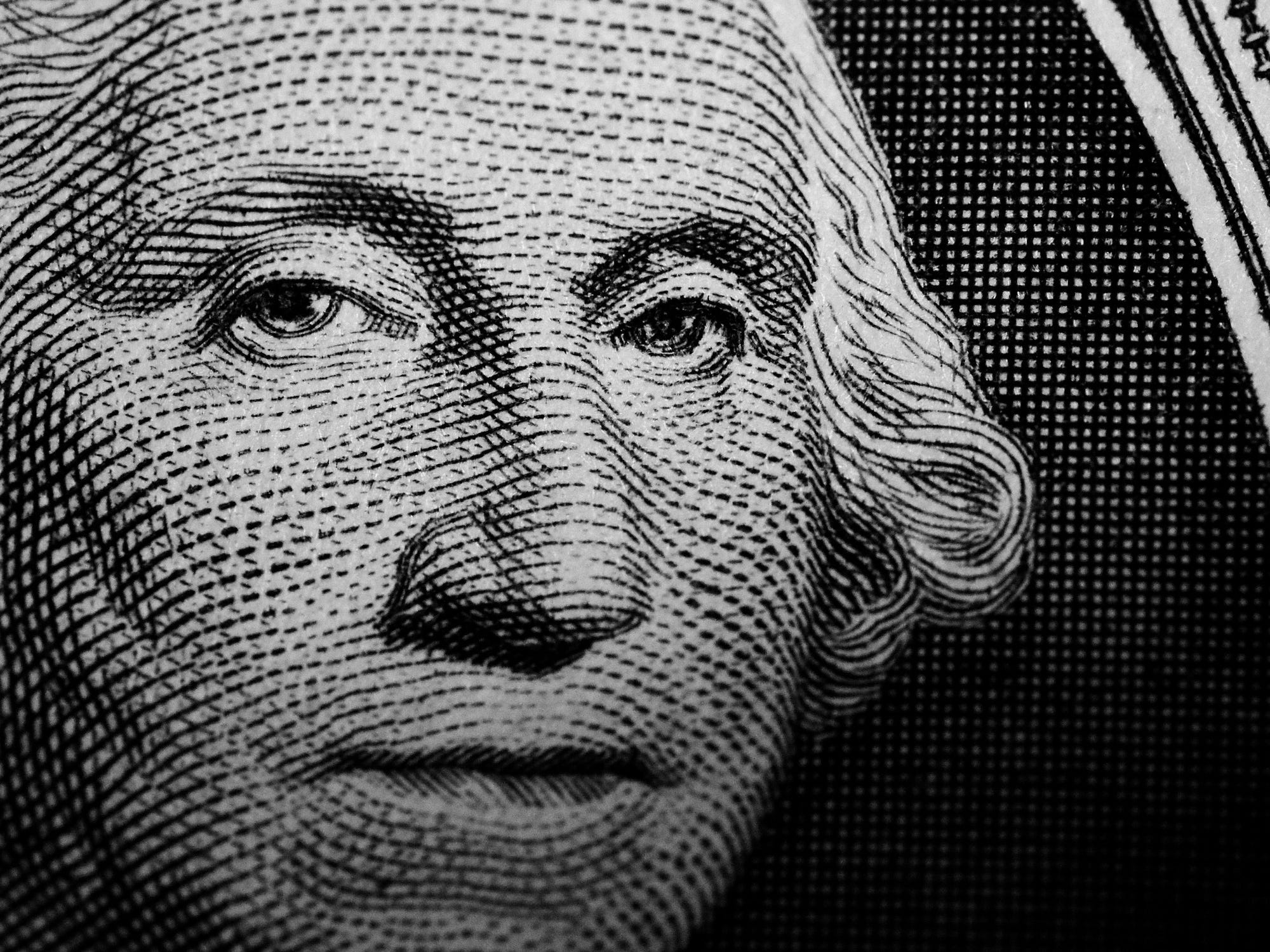
Even though this third Monday in February is now broadly called Presidents’ Day—particularly acknowledging the birthdays of Abraham Lincoln (Feb. 12) and George Washington (Feb. 22)—this is still officially the federal holiday meant to honor our first president.
With that in mind, I returned to Washington’s profound “Farewell Address”—first published (and never delivered as a speech) on Sept. 19, 1796—which he described as “the disinterested warnings of a parting friend.” In a moment, I will focus on the warnings, but in the spirit of his deep affection for the United States of America, let’s first consider his ideas about national unity.
Washington began by asserting that Americans possess “the love of liberty with every ligament of your hearts,” making it unnecessary for him to “fortify or confirm the attachment.” Then he addressed the “unity of government which constitutes you [as] one people” and his belief that this “is also now dear to you.”
He explained why: “It is justly so; for it is a main pillar in the edifice of your real independence, the support of your tranquility at home, your peace abroad, of your safety, of your prosperity, of that very liberty which you so highly prize.”
And even as Washington worried that “much pains will be taken, many artifices employed, to weaken in your minds the conviction of this truth” by “internal and external enemies,” he remained clear about the power of national unity:
…it is of infinite moment that you should properly estimate the immense value of your national Union to your collective and individual happiness; that you should cherish a cordial, habitual, and immovable attachment to it; accustoming yourselves to think and speak of it as of the palladium of your political safety and prosperity; watching for its preservation with jealous anxiety; discountenancing whatever may suggest even a suspicion that it can in any event be abandoned, and indignantly frowning upon the first dawning of every attempt to alienate any portion of our country from the rest, or to enfeeble the sacred ties which now link together the various parts.
This was no empty rhetoric simply meant to inspire while remaining untethered from the sobering threats that could undermine national unity. This address was delivered to the American people after decades of struggle to assert and then fight for independence, defeat a mad king and his tyrannical rule, and both establish and secure a new nation borne out of bloody combat.
Unlike the current holder of our nation’s highest office, George Washington dedicated himself to the survival and the advancement of a United States of America. “You have in a common cause fought and triumphed together,” he described. “The independence and liberty you possess are the work of joint councils and joint efforts—of common dangers, sufferings, and successes.”
And more, he insisted that Americans can “find in the united mass of means and efforts greater strength, greater resource, proportionably greater security from external danger” and “derive from union an exemption from those broils and wars between themselves, which so frequently afflict neighboring countries not tied together by the same government.”
“To the efficacy and permanency of your Union,” he concluded, “a government for the whole is indispensable.”
In grim contrast, note the hostile, divisive words of Donald Trump posted Friday. Desperate to hold onto unfettered power and reject the will of the people in the midterms, he threatened to require voters to present a photo ID and proof of citizenship to cast a ballot, even if Congress fails to pass such a requirement. He explained the necessity by demonizing Democrats as “corrupt and deranged,” as well as “demented and evil people” who will “knowingly, and happily, destroy” what he called “our country.”
Could this be any farther from the spirit of George Washington’s loving proclamation of national unity and the value it provides a people dedicated to liberty? But the prophetic Washington had Trump’s number. As I’ve shared before, America’s founding president understood the dangers of factionalism, “sharpened by the spirit of revenge,” which “in different ages and countries has perpetrated the most horrid enormities.”
The consequences he foresaw offer a perfect distillation of our current nightmare:
The disorders and miseries which result gradually incline the minds of men to seek security and repose in the absolute power of an individual; and sooner or later the chief of some prevailing faction, more able or more fortunate than his competitors, turns this disposition to the purposes of his own elevation on the ruins of public liberty.
Such a faction, such a despotic person, Washington recognized, “agitates the community with ill founded jealousies and false alarms, kindles the animosity of one part against another, foments occasionally riot and insurrection.”
Washington had the antidote for a reality such as ours—the pursuit of public virtue and the expansion of education—which the hateful authoritarian Trump has worked aggressively to destroy. But let’s not doubt as we look ahead that these remain part of the answer for America’s positive future.
Here’s how Washington put it:
It is substantially true that virtue or morality is a necessary spring of popular government. The rule indeed extends with more or less force to every species of free government. Who that is a sincere friend to it can look with indifference upon attempts to shake the foundation of the fabric?
Promote then, as an object of primary importance, institutions for the general diffusion of knowledge. In proportion as the structure of a government gives force to public opinion, it is essential that public opinion should be enlightened
Whether you are celebrating Honest Abe today, another beloved U.S. president or simply considering whether this is the best day to buy a mattress on sale, take a moment to appreciate that our first president offered us a knowing picture of national unity and a template to help overcome a depraved despot. In his graceful departure, after serving two terms in office, he also laid the foundation for a long-held tradition of the peaceful transfer of power—what became the most American of acts by leaders who valued democracy and loved their country more than power itself.
Please consider becoming a paid subscriber for $50 a year or just $5 a month, if you’re not already. This helps sustain and expand the work of America, America, keep nearly all the content free for everyone and give you full access to the comments sections.
The idea of the United States became real when Washington voluntarily relinquished control of the army rather than become a despot or king. We have fallen so far from that act and that strength of character.
I am struck by the eloquence of Washington’s language. Language has tremendous power, far beyond the words themselves. It is a multi-purpose tool we carried with us from one administration to another. Words, as we know, can inspire us to be our best selves. They can raise us to unimaginable heights and feats of glory when used to tap our sensitive souls and minds in the service of humanity and the highest calling of our country; its democracy.
Trump knows how to wound that democracy with words that cut and eviscerate that living democracy. It used to be a force with which we expressed our trust because, as Washington knew, that democracy lived in the hearts of its people. Its intentions were known by the words and deeds of its leaders in the service of all.
On this Presidents Day, it helped heal my sore heart to read Washington’s words. They reminded me that we once had eloquence personified in the White House. Maybe this fact doesn’t matter to some people. Maybe they think such lofty expression is out of date. I, for one, find it refreshing. I realize how much I have missed it. Maybe this reminder that a democratic spring has visited in the past and can come again will be enough to sustain us in this hard, hard winter of authoritarianism. I sure hope so. Gonna read this again…and again.
Thank you, Steven.